
ISO 9001 · ISO 14001 · IATF 16949 · RoHS / REACH

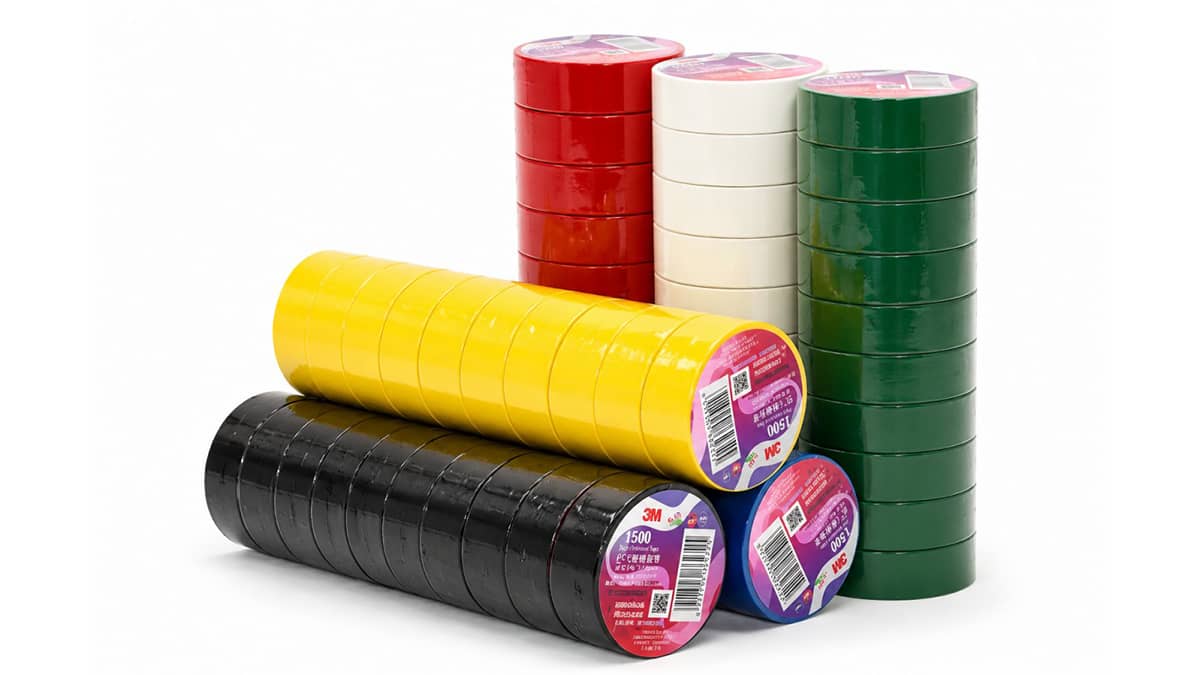
An electrical tape has one job it can’t get wrong: insulate safely. That means a backing with proven dielectric strength, an adhesive that won’t quit with heat, and flame retardancy so it self-extinguishes. The numbers on the data sheet — dielectric strength, voltage rating, UL listing, thermal class — are what tell you it will. Here’s what they mean and how to choose.
What PVC electrical tape is
The standard electrical tape is a flexible PVC (vinyl) backing coated on one side with a pressure-sensitive adhesive. The vinyl is plasticised so it stretches and conforms tightly around splices and bundles, and it’s formulated to be flame-retardant. The adhesive (and its temperature class) and the vinyl’s dielectric properties decide how and where the tape can be used.
Dielectric strength and voltage rating
Dielectric strength is the maximum electric field the insulation can withstand before it breaks down — for PVC tapes it’s commonly around 40 kV/mm, and it scales with thickness. The voltage rating (typically up to 600 V for general PVC tapes) tells you the working voltage it’s approved for. Match the rating to your application; for higher-voltage splices you build up layers or use a self-fusing tape (below).
UL 510 and listings
UL 510 is the safety standard for PVC insulating tape; a tape that is UL 510 listed (and/or CSA listed) has been tested for dielectric strength, flame retardancy and other safety properties. For code-compliant electrical work, choose a listed, flame-retardant, self-extinguishing tape — and add RoHS/REACH compliance for global markets. If your job requires a listing, say so; not every tape carries one.
Adhesive thermal class: B, F or H
| Class | Adhesive | Approx. temperature | Why choose it |
|---|---|---|---|
| B | Rubber | ~130 °C system | High tack, easy to apply — everyday work |
| F | Acrylic | ~155 °C system | Heat-aging resistance; motor/impregnant compatible |
| H | Silicone | ~180 °C system | Highest heat; no residue |
Fast answer: everyday insulating and bundling → a Class B rubber tape; hot environments, motors or under-hood → Class F acrylic; the highest temperatures → Class H silicone. For code work, make sure it’s UL 510 listed.
Color coding (phasing)
Electrical tape colors aren’t decoration — black is the standard for general insulation, and the colours are used for phasing: identifying circuit phases and voltage levels on conduit, motor leads and terminations. A consistent color scheme makes a panel safer and faster to work on. We supply the full phasing palette plus custom colours.
Conformability and “flagging”
Good vinyl stretches and conforms so the tape molds tightly to a splice or bundle and seals out moisture. The failure to avoid is flagging — the end of the wrap lifting and peeling back. The fix is technique: apply with steady tension and overlap each turn, then finish the last wrap with less tension so the end lies flat instead of springing up. Conformable tape plus correct application gives a lasting, moisture-tight wrap.
All-weather, high-temp and self-fusing
Beyond the general grades there are all-weather tapes (thicker, cold-flexible, UV-resistant) for outdoor and industrial work, high-temperature/automotive tapes for under-hood harnesses, and self-fusing rubber or silicone tapes that use no adhesive — they bond to themselves into one seamless, moisture-tight, high-voltage insulation layer for splices and sealing.
How to choose
- What voltage? Match the rating (often 600 V); build up layers or use self-fusing for higher-voltage splices.
- How hot does it get? Pick the thermal class — B (rubber), F (acrylic), H (silicone).
- Do you need a listing? Code work → UL 510 / CSA, flame-retardant.
- Insulation or identification? Black to insulate; phasing colours to identify.
- Indoor or outdoor? Outdoor/cold → an all-weather grade.
Quick match
- Everyday insulation and bundling: general Class B rubber tape.
- Code terminations and repairs: UL 510-listed professional grade.
- Motors, under-hood, hot environments: Class F acrylic or Class H silicone.
- Phase / voltage marking: color-coding tape.
- High-voltage splices and moisture sealing: self-fusing tape.
Get the electrical tape matched to your spec
As a source factory we coat our own adhesives and build PVC electrical tapes to the class and rating you need — Class B, F or H, UL 510-listed where required, in black and the full phasing palette, with your brand on the core. Tell us your voltage, temperature, listing and colour, and we’ll recommend a grade and send free samples. See the range on our PVC electrical tapes page; data sheets are under quality & documents.
Frequently asked questions
What voltage and dielectric strength do PVC electrical tapes have?
General PVC tapes are typically rated to 600 V with a dielectric strength around 40 kV/mm; exact values depend on thickness and grade and are stated on the data sheet.
Do I need a UL-listed tape?
For code-compliant electrical work, yes — a UL 510 (and/or CSA) listed, flame-retardant, self-extinguishing tape. For non-critical bundling you have more latitude.
What do the tape colors mean?
Black is for insulation; colors are for phasing — identifying circuit phases and voltage levels on conduit, leads and terminations.
Which tape for high temperature or under the hood?
A higher thermal class — Class F (acrylic) for heat-aging resistance, or Class H (silicone) for the highest temperatures. (See our adhesive guide.)
What information should I send to get a recommendation?
Tell us the voltage, the temperature, whether you need a UL/CSA listing, the colour(s), indoor or outdoor use, and your width and quantity. We’ll recommend a grade and ship samples — get in touch.